By Wayde Hall
Hot Springs After Hard Activities: A Practical Guide to Relieving Muscle Soreness
You just finished skiing a massive powder day, but now your legs feel like cement slabs. Around Durango, that’s a familiar feeling. Whether you’re an avid biker, hiker, runner, climber or you just bit off more than you can chew. Soreness happens, especially in an active mountain town with endless activities like Durango. There are a number of things to help alleviate muscle soreness to get back to doing the things you love.
A unique wellness resource in Durango are the hot springs. Hard exercise can leave your nervous system in a heightened, sympathetic state. A quiet evening in warm mineral water, surrounded by mountains, helps shift you into a parasympathetic state that supports rest and recovery. A soak isn’t a golden ticket to speed up muscle repair, but science does play a role in the healing process, starting with hydrotherapy.
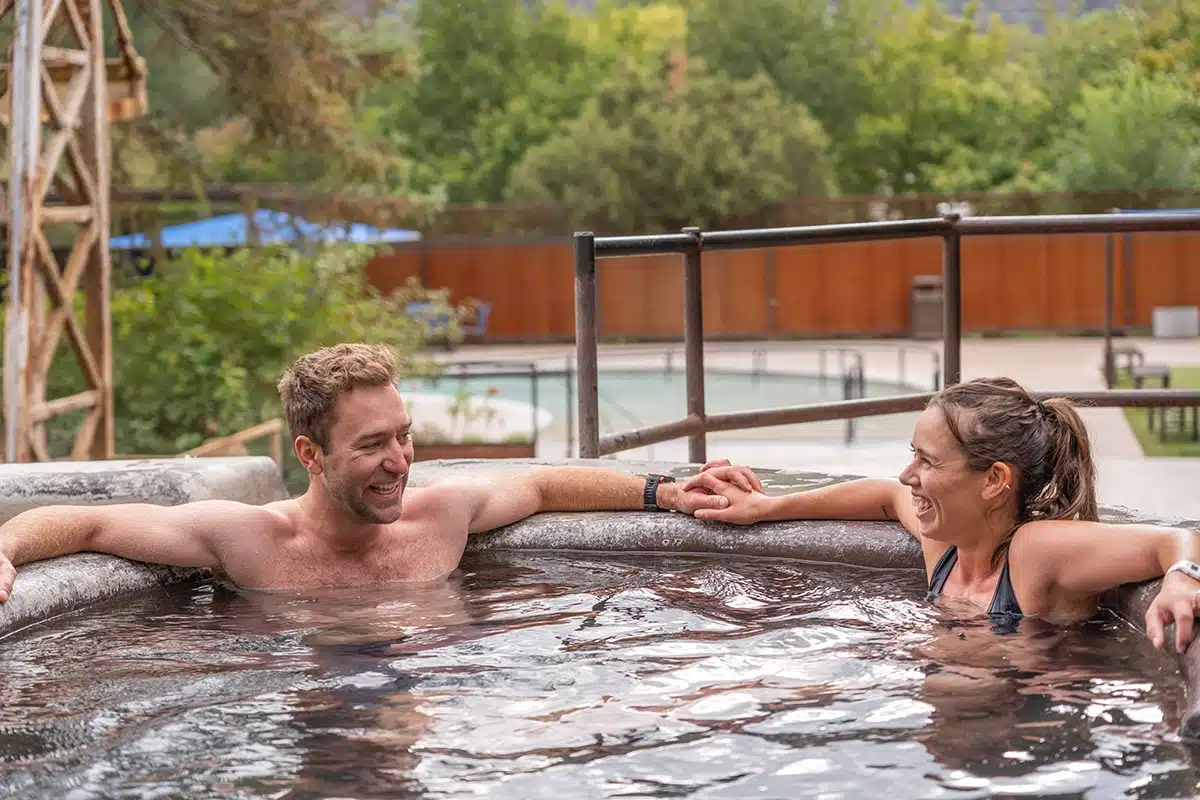
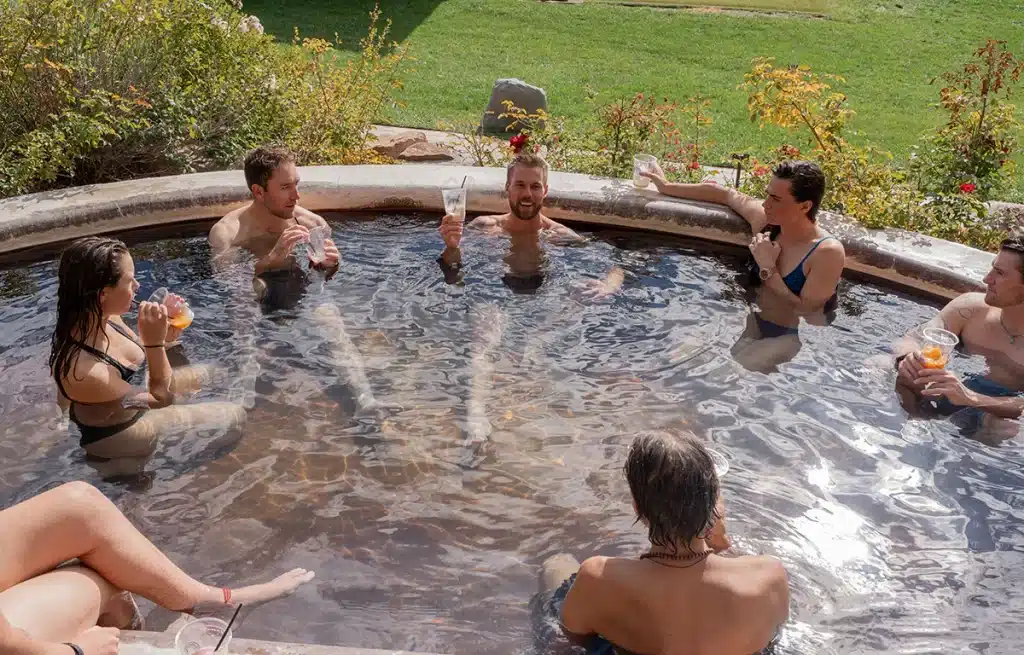
Hydrotherapy is the use of water, including different temperatures, buoyancy, and water pressure, to support movement and recovery. At Durango Hot Springs, that usually means relaxing in warm mineral water, cooling off in a cold plunge, pool walking, and letting the natural surroundings calm your nervous system.
What Hot Springs Do For Sore Muscles
The stiffness that shows up a day or two after hard exercise is called delayed onset muscle soreness, or DOMS. It’s associated with microscopic muscle damage and the body’s inflammatory response after a hard effort. Soreness usually peaks 24 to 72 hours after activity and fades within a few days. DOMS is normal, but your body can feel uncomfortable for a few days. That’s where the wonders of natural thermal mineral water can help.
Heat increases blood flow to the skin and can relax stiff muscles, which is one reason warm water feels so good after hard exercise. Cold causes blood vessels near the skin to constrict and can reduce the sensation of soreness.
Buoyancy is another benefit. Chest-deep water supports a large share of your body weight, so your hips, knees, and spine get a break from the load they carry all day. That lighter feeling makes it easier to stretch, walk, and move through your range of motion without the ache of putting full weight on tired legs.
Water pressure, or hydrostatic pressure, is another tool. Water presses on your body from all sides, and that pressure increases with depth, so the deeper you stand, the more pressure your legs experience. Around your legs it works a bit like a compression sleeve, nudging fluid and blood back toward your heart. Researchers have suggested this pressure is one reason water immersion leaves you feeling refreshed after exercise. ¹
Hot, Cold, or Both?
Warm to hot water is the go-to for stiffness and relaxation. If you’re new to soaking, start in a moderately warm pool and work up. Lightner, Haviland, and Clock Tower are great pools to start in.
Cold water is also an excellent recovery tool. In a Cochrane review, cold-water immersion (below about 59 degrees) reduced soreness compared with resting for up to four days after exercise.³ Durango Hot Springs has two cold plunges, with water as cold as 42 degrees. If you’re new to cold water, try just a quick dip and see how your body reacts.
Many guests like to alternate. Soak in warm water for several minutes, take a quick plunge, then head back to the warmth. Repeat a few rounds if it feels good and end on whichever temperature you like best. The research on contrast soaking is limited, but it’s an invigorating way to spend an evening. View a more detailed routine here.
How to Get the Most Out of Your Soak
Soaking the same day as your activity is a perfect combo, like peanut butter and jelly, and a soak the next day or two can also give relief when soreness is at its peak. Drink plenty of water before, during, and after. You sweat even while sitting still, and dehydration can sneak up on you, especially at high elevation.
Move slowly in the water to enhance your recovery. Walk a lap in the swimming pool, where buoyancy takes weight off and the water gently squeezes your legs. Our reflexology path is great for tired feet, and a massage after your soak can work on tight spots while your muscles are already warm. This is highly recommended by our therapists and is included with your massage. You can also bring a yoga mat to stretch out in the grass and a foam roller for myofascial relief. Another pro tip is to use a metal Graston tool in the water to break up scar tissue. These are also sold in the lobby.

Ready to Recover?
After a day exploring the San Juans, Durango Hot Springs gives you a range of temperatures to build your own soak, from warm and hot mineral pools to two cold plunges, plus a swimming pool and massage options. Located about eight miles north of downtown Durango in the Animas Valley, it’s an easy stop after a day on the trails, slopes, or river. Durango Hot Springs are open daily from 9 am to 10 pm, and reservations are recommended. Book your soak today!
Sources and Further Reading
Wilcock IM, Cronin JB, Hing WA. Physiological response to water immersion: a method for sport recovery? Sports Medicine, 2006. https://www.researchgate.net/publication/6850640_Physiological_Response_to_Water_Immersion
Effects of Post-Exercise Heat Exposure on Acute Recovery and Training-Induced Performance Adaptations: A Systematic Review. Sports Medicine – Open, 2025. https://link.springer.com/article/10.1186/s40798-025-00910-0
Bleakley C, McDonough S, Gardner E, et al. Cold-water immersion (cryotherapy) for preventing and treating muscle soreness after exercise. Cochrane Database of Systematic Reviews. https://www.cochrane.org/evidence/CD008262_cold-water-immersion-preventing-and-treating-muscle-soreness-after-exercise
Durango Hot Springs Resort & Spa is located at 6475 County Road 203, Durango, Colorado 81301, 8 miles north of downtown Durango in the scenic Animas Valley. Open daily 9:00 AM–10:00 PM. Reservations recommended. Spa guests receive complimentary hot springs access with their treatment.
The information in this blog is intended for general wellness education and does not constitute medical advice. Please consult a qualified healthcare provider before beginning any new wellness regimen, particularly if you have a pre-existing health condition.